
 11:38
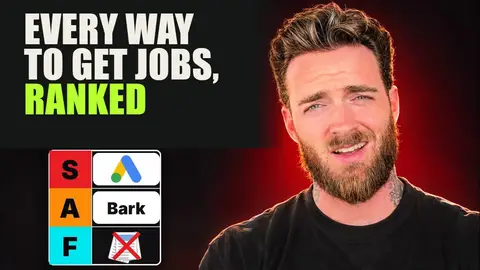
The best ways to get rubbish removal jobs are Google Ads and your Google Business Profile, because they reach people who want their rubbish gone now. Bark, Checkatrade, leaflets around a finished job and a signwritten van come next. In Michael Miller’s ranking, cold door knocking and the lead sites that attract bargain hunters, Yell and MyBuilder, sit at the bottom.
Run a man and van that does removals too? The same sources bring in removal jobs, though Michael ranked them for rubbish removal.
The full ranking at a glance
In his tier-list video, Michael Miller, who spent 12 years in the waste industry and grew Zero Waste Group from £5k to £2.5m in just 5 years, ranked every lead source for a rubbish removal business from S tier (best) to F tier (worst):
- S tier: Google Ads and your Google Business Profile
- A tier: Bark and Checkatrade, leaflets around a completed job, van signwriting
- B tier: trade relationships with letting agents, landlords and property managers, and personal-style social media
- D tier: generic social media posts
- F tier: Yell and MyBuilder, and cold door knocking
Here’s why each one landed where it did.
S tier: Google Ads
People search “rubbish removal near me” or “sofa collection near me” because they want it gone, usually that day. Michael says these aren’t warm leads, they’re scalding hot, and that no other lead source catches someone at that exact moment.
The catch is cost. Google will take your money whether or not it brings you jobs, and an account run by someone who doesn’t know the trade wastes a lot of it. The agency his old business used once bid on “bulky waste collection”: lots of impressions, but most people searching it want the council. So his test isn’t “is Google Ads expensive?” but “is the job worth more than the advert costs me?” In this business, he says, most of the time it is. The common money leaks are covered in why waste removal Google Ads get expensive.
S tier: Google Business Profile
It costs nothing, and it’s your listing in the map results. Michael describes it as your business’s Facebook profile on Google, and the problem, he says, is that most people set it up and never touch it again. His standard: new pictures every week as a minimum, including before-and-after shots of big jobs, plus videos. The right category, service area and opening hours. And a review request on every job, ideally while you’re taking payment, when the customer is happiest. Our Google Business Profile tips for waste removal companies cover the setup in detail.
A tier: Bark and Checkatrade
Michael doesn’t lump all paid lead sites together. Bark and Checkatrade go in A tier. Bark costs £150 for 100 credits, and he says clients he has recommended it to were, at the time of the video, seeing around £1,500 to £2,500 back from Bark alone, and about £6,000 on £300 a month with Checkatrade added. The condition is that you’re picky: choose leads few other firms are bidding on, from customers who look like your typical customer.
A tier: leaflets around a completed job
Not mass drops across a whole town. When you finish a job, you and whoever is working with you take ten leaflets each and do both sides of the road. The neighbours have just watched you load the van, seen that you work professionally and seen how happy their neighbour is. It takes five minutes. Keep the leaflet simple: what you do in big letters, your number, your waste carrier licence and a trust signal such as “licensed and insured”.
A tier: van signwriting
This is Michael’s favourite. He puts it at around £150 to £400 as a one-off cost per vehicle, and calls it the cheapest marketing you’ll ever buy. Your van might cover 100 to 200 miles a day, and it’s parked outside every job, sat at the tip and sat in traffic. Keep it simple and readable from across the road: the service in big, bold letters, the logo smaller, and the number or website easy to read.
B tier: letting agents, landlords and property managers
Depending on the size of the company, Michael says, trade work can be anything from S to C tier, so overall he puts it in B. It’s rarely the most profitable work, but it’s regular, it fills the gaps between other jobs and it builds recurring revenue. It’s also slow to build: he suggests three to four hours a week. One good letting agent will use you again and again, and one good housing association, he says, can give you 10 to 20 jobs a week.
B and D tier: social media
Posting a picture of your leaflet with “get a quote today” on every platform is D tier. Doing it properly is B tier: show your face, show the weird stuff you find, tell the story of the job, and be a person rather than an advert.
F tier: Yell, MyBuilder and cold door knocking
Michael finds Yell and MyBuilder produce very cheap leads: people looking for the cheapest possible way to get the job done. Cold door knocking is a waste of time, he says, because people don’t trust a stranger at the door and the job value isn’t worth the time. The one exception: if you’re working at a house and the neighbour has a mattress in the garden, knock and offer to take it while you’re there.
Where should you start?
Michael’s advice is to plan your week and your marketing around the top of the list: Google Ads, your Google Business Profile, Bark and Checkatrade, and trade customers. For a small firm, a sensible order is:
- Get your Google Business Profile right and start the weekly photos and reviews habit. It’s free.
- Sign your van and print leaflets for the five-minute drop after every job.
- Use Bark and Checkatrade selectively while your own marketing builds.
- Start Google Ads once you know what a job is worth to you, with call tracking in place.
- Set aside a few hours a week for trade relationships.
If you’re just starting out, the free start-up guide puts this in order alongside the licence, the van and pricing.
Your next step
Look at where your last 20 jobs came from. If nearly all came from one source, that’s a risk, and a clue to which tier to add next. Our waste removal marketing page explains how we help firms with Google Ads, SEO and websites. To talk it through, book a free 30-minute consultation. We take on one business per territory, so check whether your county is still free.
FAQs
Quick answers
What is the best way to get rubbish removal jobs?
In Michael Miller’s tier list, Google Ads and a well-run Google Business Profile are the best, because they reach people who want their rubbish removed now. Bark, Checkatrade, leaflets around finished jobs and van signwriting come next.
Is door knocking worth it for rubbish removal?
Cold door knocking isn’t, in Michael’s view: people don’t trust a stranger at the door and the jobs aren’t worth the time. The exception is offering to take a neighbour’s visible waste while you’re already working next door.
Are Yell and MyBuilder good for rubbish removal leads?
Michael ranks both F tier, because in his experience they tend to bring customers looking for the cheapest possible option.
How can a new rubbish removal business get its first jobs?
Start with free and low-cost sources: a complete Google Business Profile, Facebook local groups, leaflets around each job and a signwritten van. Then add Bark and Checkatrade selectively, and Google Ads once you know your numbers.