
Free PDF guide · 22 pages · 14 steps
How to start a rubbish removal business: the free step-by-step guide
To start a rubbish removal business in the UK, you register a company, get a waste carrier’s licence and insurance, set up a simple website, choose the right van and find licensed transfer stations to tip at, then win jobs and price them for profit. This free guide takes you through all 14 steps, using only figures from Michael Miller’s own videos. Michael started Zero Waste Group with £5,000 and grew it to £2.5m in just 5 years, before selling it and starting Requiq.
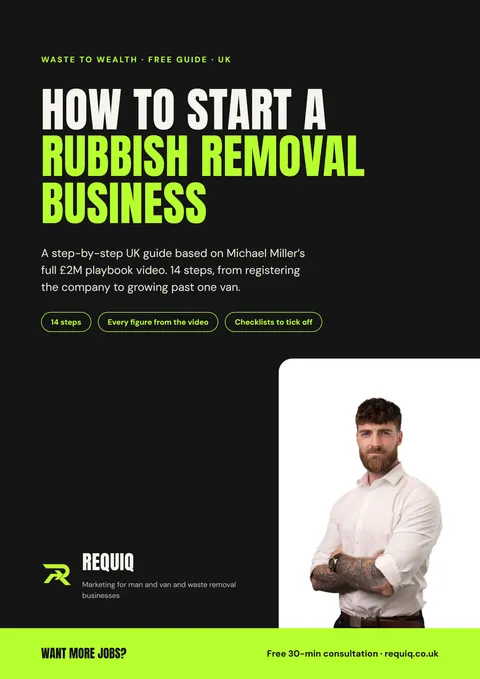
Free download
Get the free guide
The step-by-step start-up guide, built on Michael’s playbook video.
What’s inside
Everything Michael would do again, step by step
- The legal set-up: your company, waste carrier’s licence and insurance
- What a website needs to turn visitors into enquiries, and the mistake Michael made
- Tipper or Luton: which van to get, and what it costs to buy or finance
- Four places to find your first jobs, with what each one costs
- Where to tip legally, and why the council tip often isn’t the answer
- How Michael won his first job, and what his first month looked like
- Michael’s load sizes, prices and weight allowances
- The special items and tip costs that eat into your profit
- Getting found on Google: your Business Profile, Google Ads and SEO
- Keeping customers with a CRM, word of mouth and the extra mile
The 14 steps
The guide at a glance
- 01
Register your company and get your waste carrier licence
Register the company on GOV.UK, get your waste carrier’s licence and put your insurance in place before you carry anyone’s waste.
Watch this step (0:13) - 02
Build a website that turns visitors into enquiries
Buy a simple domain and build a site with one job: turning visitors into bookings, call-back requests and calls.
Watch this step (0:41) - 03
Choose the right van
Get a tipper if you’re mainly doing waste, or a Maxi Mover or Luton if you’re doing more house clearances and moves.
Watch this step (1:33) - 04
Line up your first leads
Start with the four lead sources Michael names (Facebook local groups, Bark, Checkatrade and AnyJunk) and reply fast.
Watch this step (2:19) - 05
Tip legally at licensed waste transfer stations
Don’t assume you can use the council tip: find registered, licensed waste transfer stations near you, know what they charge and keep your paperwork.
Watch this step (4:34) - 06
Win your first jobs and stand out
Sell the answer to the customer’s problem, look more professional than the cowboys and keep posting and replying on Facebook, as Michael did in a first month of 35 to 50 jobs.
Watch this step (5:00) - 07
Know the four costs in every job
Every job has four costs (the tip fee, special items, labour and time, and fuel and travel), and missing one can mean working for free.
Watch this step (8:38) - 08
Set your load sizes and prices, with a weight allowance
Price by load size, from a minimum charge up to a full load, and build a weight allowance into every price.
Watch this step (9:59) - 09
Charge extra for special items
Fridges, mattresses, sofas, TVs and tyres cost extra to tip, so find out about them before you quote and add them on top.
Watch this step (14:26) - 10
Know your tip, labour and fuel costs before you quote
Work out what the tip, the labour and the fuel will cost before you give a price, and keep disposal to 20–25% of the job value.
Watch this step (16:34) - 11
Get found on Google
Michael’s business only really grew once he used Google Ads and SEO, so set up your free Google Business Profile, then invest in ads and in ranking.
Watch this step (19:58) - 12
Use a CRM to turn one-off jobs into repeat work
Keep every customer’s details in a CRM so you can win repeat work: Michael’s recurring work went from about 3% to about 60%.
Watch this step (22:12) - 13
Make your van and your service do the marketing
A signwritten, clean van, a crew in uniform and a bit of extra effort on every job bring in reviews, referrals and the neighbours’ work.
Watch this step (24:02) - 14
Follow the recipe
Put it all together, from looking professional and going the extra mile to Google and a CRM, and see how much more one van can do.
Watch this step (26:22)
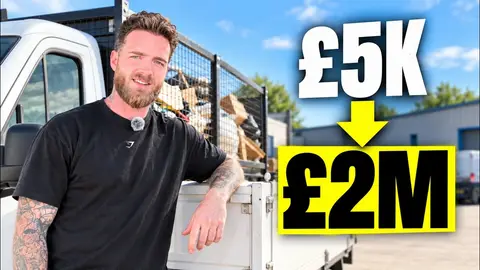 28:41
Waste to Wealth · 28:41
The worked example: The full start-up playbook
The guide follows this video. Click a chapter to jump straight to that part.
Jump to a chapter
Who it’s for
Written for people about to start, or just started
- You’re thinking about starting a rubbish removal, man and van or house clearance business in the UK
- You’ve just started and want a checklist so nothing gets missed
- You’re already busy but not sure your prices cover the tip, the labour and the fuel
- You run one or two vans and want to know what made Michael’s business grow
FAQs
Starting a rubbish removal business: quick answers
Is the guide free?
Yes. Leave your email address and you can download the PDF.
Who wrote the guide?
Requiq wrote it, step by step, from Michael Miller’s full playbook video. Michael spent 12 years in the waste industry. He started Zero Waste Group with £5,000 and grew it to £2.5m in just 5 years, before selling it and starting Requiq.
How much does it cost to start a rubbish removal business in the UK?
In Michael’s video, it’s £100 to register the company, £191.02 for the waste carrier’s licence, and £5,000–£9,000 for a van bought outright (or £250–£350 a month on finance). Check GOV.UK for the current fees.
Do I need a waste carrier licence to start?
Yes. Michael calls it a legal requirement in the UK to carry and transport waste. The guide explains where to check the current fee, including if you’re in Wales, Scotland or Northern Ireland.
Does it work for house clearance and man and van businesses?
Yes. The steps are the same, and Michael covers which van suits house clearances and moves: a Maxi Mover or a Luton, because the box is enclosed.
Are the prices in the guide a rule?
No. They’re the prices Michael gives in his video, with the weight allowance he builds into each load. Check what others charge in your area and what your local tips cost.
Free download
How to start a rubbish removal business
Michael’s step-by-step guide, built on his full playbook video: the company and licence, the van, your first jobs, pricing every job for profit and getting found on Google.