
 12:28
A CRM (customer relationship management system) is one place where every enquiry, customer and job is recorded, so you can contact people again and see where your work comes from. A rubbish removal business needs one because a lot of its best future work comes from people it has already served: landlords, letting agents, solicitors, cleaning companies and their neighbours. Without a CRM, you pay to win a customer once and then lose them.
What is a CRM, in plain terms?
Forget the jargon. A CRM is a list of everyone who has ever contacted you: what they asked for, what you quoted, whether they booked and how to reach them again. It can be job management software built for trades or, on day one, a well-kept spreadsheet. What matters is that every enquiry goes into it, every time, whoever takes the call.
Most small firms already have this information. It’s just scattered across a phone’s call log, WhatsApp chats, a notebook in the van and an email inbox. Scattered information can’t be searched, followed up or counted.
Michael’s mistake: no CRM
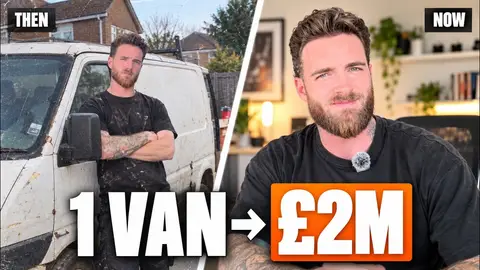
In his honest-story video, Michael Miller, Requiq’s founder, who grew Zero Waste Group from £5k to £2.5m in just 5 years, names having no CRM as one of the mistakes that cost him money.
His point is simple. Every channel you pay for, Google Ads included, brings in more than one-off households. It brings contractors, cleaning companies, and solicitors and probate firms dealing with house clearances. If you don’t capture their details, you pay to win that customer and then never really speak to them again.
Once his business had a CRM, those contacts were kept on file and could be re-engaged, with their permission. In his words, that grew the business substantially, and it grew the part of the revenue that comes in without any advertising at all: work that comes through relationships.
Why it matters more in rubbish removal than in most trades
Plenty of your customers only need you once. That’s exactly why the ones who need you again are so valuable:
- Trade customers (letting agents, landlords, property managers, cleaning companies, builders) can send work again and again.
- Solicitors and probate firms deal with estates, and estates need clearing.
- Households move, renovate, clear the garage or lose a relative. They call the firm whose number they can find.
- Neighbours watch you work. Michael says that when they looked back through the CRM by postcode a year after a clearance, they would find maybe three or four house clearances on the same road, because customers had recommended them to their neighbours.
You can only see patterns like that when the information is in one place.
What to record for every enquiry
Keep it short enough that your crew will actually do it:
- Name, phone, email, and the address or postcode of the job
- Customer type: household, landlord, letting agent, solicitor, builder or other business
- Where they found you: Google Ads, Google profile, Bark, Checkatrade, a leaflet, the van, a referral
- What they wanted, what you quoted and whether it booked
- Job date, final price and any special items such as fridges, mattresses or sofas
- Before-and-after photos and the waste transfer note
- Whether they’re happy to hear from you again
The “where they found you” field is the easiest one to skip, and it’s the one that tells you which marketing is worth paying for.
What a CRM lets you do that a notebook can’t
Follow up quotes that didn’t book
Some people get three quotes and go quiet. A polite follow-up a day or two later wins some of them back. Without a list of open quotes, nobody remembers to do it.
Get back in touch with trade customers
A letting agent who used you in March may have three empty properties in June. A short message when you have a gap in the diary keeps you in mind. In a short video about empty diaries, Michael makes the same point: build relationships with contractors, cleaning companies, solicitors and probate firms, and keep their details in a CRM.
See which marketing actually books jobs
If every booked job carries its source, you can compare the cost per booked job across Google Ads, lead sites and leaflets. That’s far more useful than counting clicks or leads. Our guide to how much a man and van should spend on Google Ads explains why your enquiry-to-booking rate is the most useful number in your business. A CRM is where it comes from.
Ask for reviews at the right moment
A job marked complete can prompt a review request the same day, while the customer is still pleased.
Do you need expensive software?
No. Start with something you will use every day. For a one-van business, a shared spreadsheet or a simple job app the whole crew can update from their phones is fine. As you add vans and staff, move to job management software that handles quotes, bookings, reminders and invoices in one place, so nothing has to be typed twice.
Whatever you choose, check three things: everyone can add to it from a phone, you can export your data, and you can see the source of every booked job.
Stay on the right side of data rules
Your customers’ details are personal data. Keep them secure, collect only what you need, and only send marketing messages to people who are happy to receive them, with an easy way to opt out. Michael’s own phrase is the right one: re-engage people “obviously with their permission”.
How a CRM ties into getting more calls
When the diary goes quiet, the usual reaction is to spend more on ads. A CRM gets more from the enquiries you already pay for: more quotes followed up, more repeat bookings, more referrals and a clear view of which channels work. That’s the heart of our CTR and conversion optimisation work: turning more of the people who already find you into booked jobs.
Your next step
This week, put every enquiry from the last month into one sheet, with where each came from and whether it booked. You’ll learn more about your marketing in an hour than in a month of guessing. If you’d like a second pair of eyes on what it shows, book a free 30-minute consultation or email hello@requiq.co.uk.
FAQs
Quick answers
What is a CRM for a man and van business?
A CRM is one place where every enquiry, customer and job is recorded, with contact details, what was quoted, whether it booked and where the customer found you. It can be trade job software or, to start with, a well-kept spreadsheet.
Do I need a CRM if I only have one van?
Yes, and one van is the easiest time to start. Recording every enquiry and its source is what lets you follow up quotes, win repeat work and see which marketing pays.
What should I record about each rubbish removal customer?
Name, contact details, job postcode, customer type, where they found you, what you quoted, whether it booked, the final price, photos, and whether they’re happy to be contacted again.
Can a CRM really bring in repeat work?
In Michael Miller’s business, recurring work went from about 3% when he started to about 60% by the time he left. He credits keeping trade contacts such as solicitors, probate firms and cleaning companies in a CRM and staying in touch.
Can I send marketing texts or emails to old customers?
Generally only if they’ve agreed to hear from you, or they’re existing customers who were given a clear chance to opt out when you took their details. Every message should include an easy way to stop them; the ICO’s guidance on electronic marketing has the detail.