
 6:55
A rubbish removal website has one job: turning the people who land on it into calls, WhatsApp messages and quote requests. To do that it needs a clear headline saying what you do and where, a page for each main service, proof that you’re licensed and trusted, a simple way to get a price, and landing pages that match any ads you run. A good-looking homepage on its own is not enough.
Michael’s website mistake
In his honest-story video, Michael Miller describes one of the mistakes that cost his first business money. He was paying for Google Ads and sending the clicks to his website, but it was a typical standard homepage. It wasn’t set up to funnel visitors into qualified leads that turned into jobs.
So, in his words, they spent a lot of money on Google Ads at the start and didn’t get the best results. It was only when he met Marc Heighway, who now works with Requiq, that the landing pages were properly optimised. From then on, a big part of Michael’s job became raising the click-through rate and conversion rate of those pages, so that more leads became jobs.
The lesson for any small firm: traffic is only worth paying for if the page it lands on gets the call.
Treat the website as a funnel, not a brochure
In his start-up video, Michael calls your domain name the shop front of your business. He says the website should be a very good funnel for turning people who land on it into leads, with clear unique selling points and a clear, simple way to book in, request a call back or get in touch.
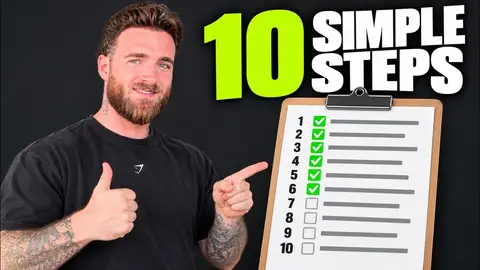
In his 10-step video, “Build a website that converts” is step 3, before marketing. That order matters. If you advertise first and fix the site later, you pay for visitors who leave.
The pages a rubbish removal website needs
A homepage that answers three questions fast
What do you do, where, and how do I get a price? Put the phone number and a quote button at the top, with a short line on why someone should pick you.
One page per main service
Rubbish removal, house clearance, garden waste, furniture and mattress collection, garage clearance, office clearance: whatever you actually want more of. Each page should say what’s included, what you take, how you price it and what happens on the day. Separate pages also give Google something specific to rank for each service.
Pages for the areas you cover
If you cover several towns, a page for each main town helps local customers and local searches. Make each one genuinely useful: the areas you cover, jobs you’ve done there, how quickly you can usually get there. Copying the same page with a different town name helps nobody.
Landing pages for your ads
Every ad should land on a page that matches the search. Someone searching for house clearance should land on a house clearance page, not a homepage about everything. This is the exact gap Michael fell into.
A “how we price” page
You don’t need a full price list online, but customers want a rough idea before they call. Explain how you price (by load size, weight and special items), give examples or “from” prices, and say what’s included.
An about page with real people
Customers are letting you onto their property and trusting you with their waste. Real names, real faces and real vans build trust that stock photos can’t.
A contact page that works for trade customers
Letting agents, landlords and solicitors want an email address, how you invoice and how quickly you can attend. A short section for trade customers makes repeat work easier to win.
What every page should show
- A tappable phone number and a quote button, visible without scrolling on a phone
- A WhatsApp option for photo quotes (using WhatsApp for quotes is one of the fixes in Michael’s “Stuck at £10K a Month?” video)
- Your waste carrier registration number, your insurance and how you dispose of waste
- Recent reviews and before-and-after photos of real jobs
- Your opening hours and how quickly you usually reply
- A simple three-step process: send photos or call, get a price, we collect
For page-by-page checks on speed, headlines, quote forms and the rest, see why your rubbish removal website isn’t getting calls. That post is about fixing the site you have; this one is about what the site needs in the first place.
Do you need an expensive website to start?
No. For a brand new business, Michael suggests a simple site built with WordPress or an AI website builder: not the best long term, but good for a start and cost-effective. Choose a simple domain name, and pick your company name with search in mind, which is step 1 of his 10-step video. What matters most at the start is that the site loads fast on a phone, says what you do and where, and makes it easy to call.
As the business grows and you start paying for ads, the site has to work harder: proper service and area pages, landing pages for ads, and tracking on calls and forms so you can see what each page brings in.
How do you know if your website is working?
Track it. Count calls from the site, form submissions and WhatsApp clicks, and record in your CRM which booked jobs came from the website. If plenty of people visit and few get in touch, the site is the problem. If few people visit, it’s visibility, which is where SEO and Google Ads come in. And once a month, go through it on your own phone, the way a customer would.
Your next step
If your website is just a homepage, or your ads land on one, that’s the first thing to fix. Our man and van website design service builds fast, mobile-first sites for rubbish removal and house clearance firms, set up to get calls. Book a free 30-minute consultation and we’ll look at what your current site is missing.
FAQs
Quick answers
What pages does a rubbish removal website need?
A homepage that says what you do and where, a page for each main service, pages for the main towns you cover, a page explaining how you price, an about page with real people, and landing pages for any ads you run.
Should I send Google Ads traffic to my homepage?
No. Send each ad to a page that matches the search. Michael Miller sent ad clicks to a standard homepage in his first business and says they spent a lot on ads without getting the best results until the landing pages were optimised.
Can I start with a cheap website for my rubbish removal business?
Yes. Michael suggests a simple WordPress or AI-built site to start: not the best long term, but cost-effective. Make sure it’s fast on a phone and makes it easy to call or send photos.
Should a rubbish removal website show prices?
It helps to explain how you price and give examples or “from” prices, even without a full price list. Customers want a rough idea of cost before they call.